The trial of Ryan McGregor
Noughts & CrossesThe trial of Ryan McGregor is a public prosecution that places the charge of political terrorism and seven murder counts against a father before a jury and a family forced to watch. Ryan’s not-guilty pleas do not prevent conviction, and the sentence culminates in his execution at Hewmett Prison. Told through Callum’s and Sephy’s alternating first-person perspectives, the trial exposes the distance between courtroom procedure and the characters’ sense of justice, while making the consequences of the verdict visible in the lives of Ryan’s family and the wider Nought–Cross divide.
Causes and Background
The trial follows the Dundale Shopping Centre bombing and the deaths attributed to it. When Jude returns home, he explains that his cell had been ordered to carry out the bombing and that some members had helped set it up the previous night. He says they were promised a warning call an hour before it went off so that everyone could be evacuated. His account leaves him bewildered when his father asks about the warning; their mother responds that people have been killed. Ryan’s later prosecution therefore unfolds amid a family’s conflicting explanations of the bombing and the consequences of political violence.
The trial is also framed by unequal treatment beyond the courtroom. At Heathcroft, a crowd gathers against the newly admitted Nought students, chanting against their presence while police try to move the crowd and reach the entrance. Later, Sephy watches a television report on the school and recognizes that it omits the police allowing Crosses to harass the Nought students, as well as the spit covering the back of her jacket. The report describes the hostility in softened terms. These scenes establish a wider context in which official and public accounts of events can obscure what Noughts experience directly.
Institutional attitudes appear in the school administration as well. Sephy overhears Mrs Paxton warning that the Nought students are constantly being picked on and that one of them may retaliate. Mr Costa answers that if they are finding it difficult, they can go elsewhere. The exchange does not determine the trial’s outcome, but it shows how a supposed response to conflict can place the burden on the excluded group rather than those targeting them. The legal proceedings later become another institutional setting in which Sephy and Callum doubt that formal procedure guarantees equal justice.
Pleas in Court
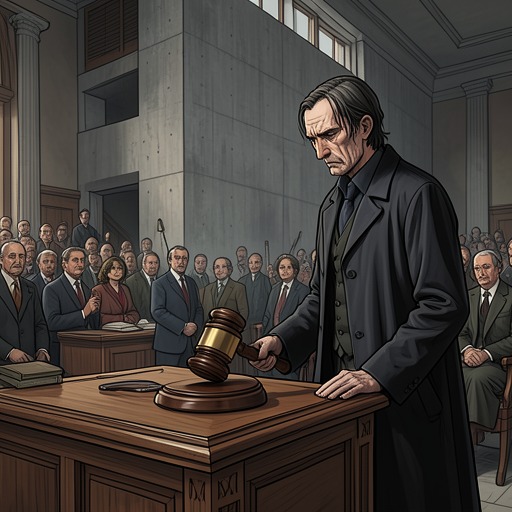
Callum watches from the packed public gallery as the judge instructs the jury about the case. His father is far below him, and Callum sees the bruising on his face, having seen him only once since the police entered their lives. When the clerk asks Ryan how he pleads to political terrorism, Callum shouts for his father not to do it. Judge Anderson threatens to clear the public gallery if there are further outbursts. Callum knows his protest may make matters worse, but cannot remain silent as the charge is put to his father.
Ryan looks toward Callum and his mother, then answers, “Not guilty!” The clerk proceeds to the murder charge concerning Aysha Pilling and then reads the separate charges. Ryan pleads not guilty to each. As the clerk reaches the seventh murder charge, the courtroom becomes louder; Ryan repeats his plea strongly enough to be heard over the uproar. The judge orders the gallery cleared. For Callum, Ryan’s refusal to plead guilty is a moment of happiness within a proceeding he regards as a farce: the family’s emotional certainty and the court’s authority are already pulling in opposite directions.
Sephy’s family sees the trial through another register of consequence. Her mother warns that the family name will be dragged through court, newspapers, and public attention because Sephy has been associated with Callum and his family. When Sephy objects that the situation is hardly her fault, her mother answers with a proverb about lying down with dogs and getting fleas. Her response treats the connection as a source of contamination and scandal, sharpening the racial and familial pressure surrounding the proceedings rather than engaging with Ryan’s plea.
Verdict and Sentence
At the verdict hearing, the foreman confirms that the jury has reached an agreed decision. Sephy cannot make out the first answer and is unsure whether the foreman has spoken at all. When the clerk asks whether Ryan is guilty of murdering Aysha Pilling, Sephy hears the verdict. The narrative does not reproduce the word she hears in that moment, but the later announcement at Hewmett Prison confirms that Ryan has been found guilty of seven counts of murder and political terrorism. The delay between the question and Sephy’s comprehension makes the verdict arrive first as suspense, then as an irreversible fact.
Ryan’s appeal is denied. At Hewmett Prison, an official announces that the execution will be carried out by hanging. Sephy has arrived with her family without understanding why they are there; she realizes the purpose of the visit only when the execution is formally announced. Across the courtyard, Noughts stand while the Crosses sit in the audience. Sephy catches Callum’s eye and is shocked to see him there. The public ritual places the family’s private loss within a divided crowd, turning the court’s sentence into a visible social event.
Families, Witnesses, and Consequences
For Callum, the trial is not an abstract legal dispute. He sees his father’s battered face, hears him reject every charge, and risks the judge’s anger by trying to interrupt the plea. His mother restrains him in the gallery, while Ryan’s look toward them gives the family a brief point of contact inside the proceeding. The court can remove the spectators, but it cannot make the verdict emotionally distant from those who remain outside its authority.
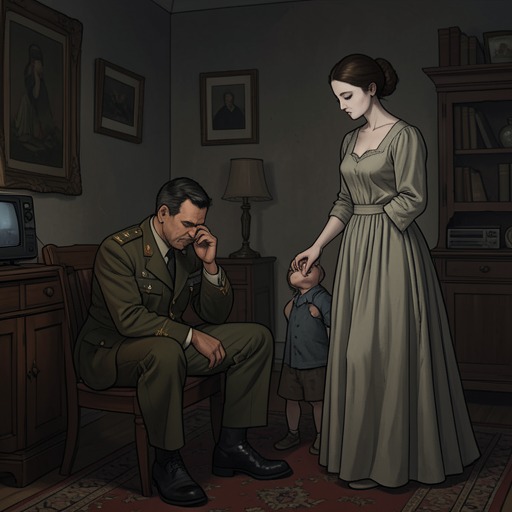
For Sephy, the case brings the McGregor family’s fate into conflict with her own family’s concern for status and reputation. Her mother’s warning turns association with Callum into a danger to the Hadleys’ public standing. At the prison, however, Sephy is made a witness to the outcome that this distance cannot undo. Ryan’s conviction and execution connect the courtroom’s decision to the family relationships and racial divisions that the novel follows beyond the trial itself.
Narrative and Significance
The trial is presented through alternating character perspectives rather than an impersonal account of legal evidence. Callum’s view emphasizes his father’s plea and the strain of watching from the gallery; Sephy’s perspective makes the verdict difficult to hear and the execution initially difficult to understand. Neither perspective supplies the jury’s reasoning. Instead, the narrative concentrates on what the proceedings reveal to those who must live with their result: the gap between official authority and personal conviction, and the fear that institutions shaped by racial hierarchy may not deliver justice equally.
The sequence moves from accusation, through Ryan’s repeated not-guilty pleas, to a verdict confirmed by the later prison announcement and an execution that the appeal fails to prevent. Its significance lies not only in Ryan’s sentence, but in the way the trial makes a family’s loss public and intensifies the novel’s central conflict over Nought–Cross inequality. The courtroom’s verdict is final in law; for Callum and Sephy, it becomes a defining rupture whose consequences continue after the proceedings end.